FREE COUNCIL SUPPORT · SUFFOLK GUIDE 2026
Care Needs Assessment in Suffolk: What to Expect in 2026
A care needs assessment in Suffolk is a free conversation with Suffolk County Council that works out what help you, or someone you care for, needs day to day, and whether the council can help arrange or pay for care. Anyone who lives in Suffolk can ask for one.
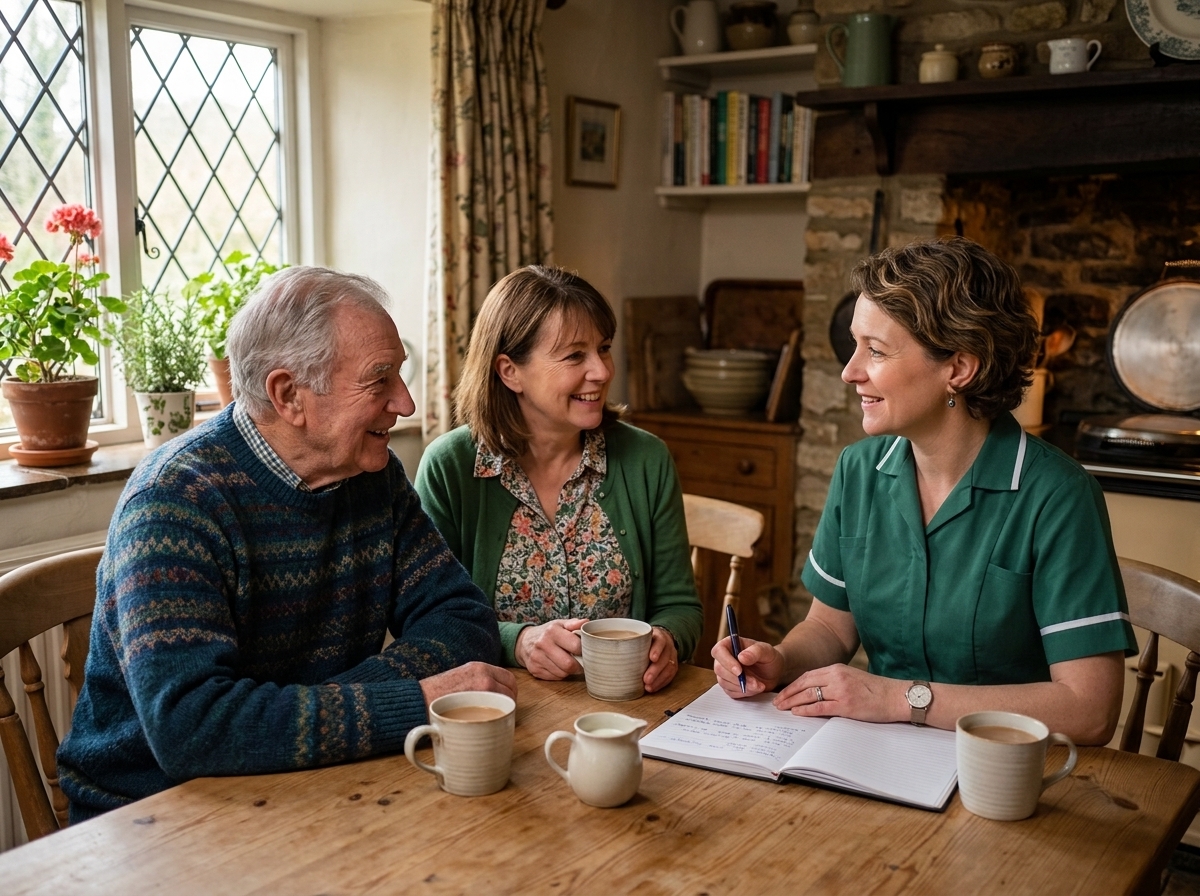
Sound familiar?
The first official step towards help at home
Whatever brought you here, the care needs assessment is usually where council support starts. We are a home care provider based in Haverhill, and families often ask us about this process, so we have put the answers in one place.
Mum has had a fall
and you are worried about her managing alone at home.
Dad is skipping meals
or forgetting his medicines more often than before.
You are doing too much
and the caring is more than you can keep up with.
The basics
What is a care needs assessment in Suffolk?
A care needs assessment is a conversation that looks at what support a person needs in daily life and whether they qualify for help from the council. Suffolk County Council calls it a care and support assessment, and it is the first step towards council social care.
Anyone who lives in Suffolk can request one, either for themselves or for someone they look after (Suffolk County Council). A friend or relative can ask on someone’s behalf with their permission. If the person lacks the mental capacity to decide, someone can still ask if it is in their best interests (Age UK).
Step by step
How to get a care needs assessment in Suffolk: 7 steps
Try the online self-assessment
Suffolk County Council recommends doing its online self-assessment first. It shows what needs you may have, whether a full assessment would help, and what local support could keep you independent (Suffolk County Council). Age Space describes it as a quick 10-minute form (Age Space).
Request a full assessment from Customer First
You can skip the self-assessment and contact adult social care directly (Suffolk County Council):
Outside office hours the phone line diverts to the Emergency Duty Service, for problems that cannot wait until the next working day. Your GP can also refer you (The Good Care Group).
Get consent and decide who will be there
If you are arranging this for a parent, talk to them first. It helps to have a friend or relative at the assessment, and they can take notes (NHS). If the person cannot speak up for themselves and has no one to help, the council must provide an advocate (Age UK).
Prepare
Give as much detail as you can about every task that is a struggle, even small ones like turning taps on and off. Leaving things out can reduce the care recommended (NHS). See our preparation checklist ↓
Have the assessment conversation
It is usually a conversation between the person, a trained assessor from the council or a partner organisation, and anyone who already helps, such as a doctor or neighbour (Suffolk County Council). It can happen face to face, by phone, online or by self-assessment (NHS). If a phone call doesn’t feel right, ask for a face-to-face visit (Age UK). One provider puts the usual length at 30 minutes to an hour (The Good Care Group).
Get the eligibility decision
Afterwards you get a copy of the outcome. It shows whether you are eligible for council help under the national eligibility criteria (Suffolk County Council).
Financial assessment, care plan and personal budget
If you are eligible, the council does a financial assessment to work out what you pay. It also helps you create a care and support plan and arranges a personal budget (Suffolk County Council). Our guide to home care costs in Suffolk explains the savings limits and how the means test works.
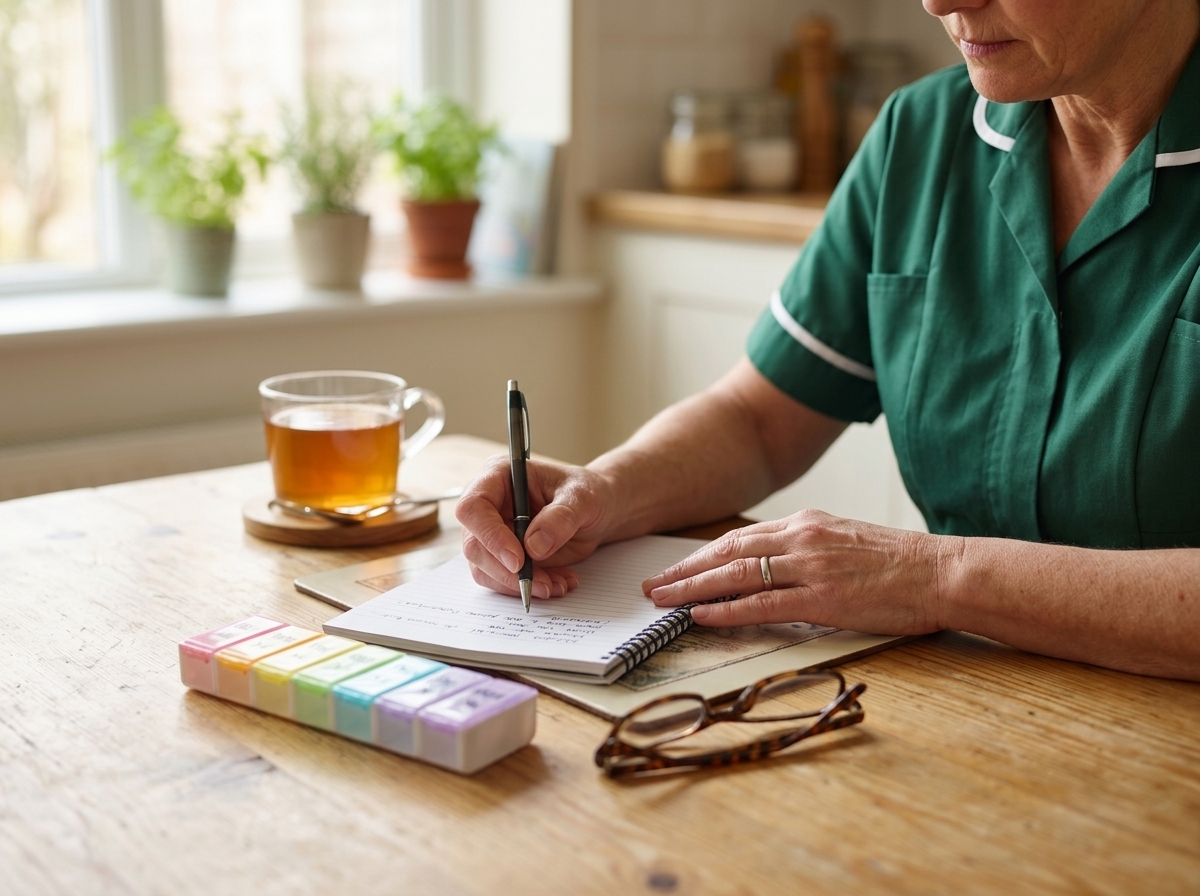
Be ready
Your preparation checklist
On the day
What questions does the assessor ask?
The assessor wants to understand how everyday life really goes. They may ask you to describe simple tasks, like making a cup of tea or getting up from a chair (NHS).
Suffolk’s assessment covers both physical needs and mental and emotional needs, such as being able to meet friends. It also looks at the person’s strengths and the support around them in the community (Suffolk County Council).
The rules
How does Suffolk decide if you are eligible for care?
Suffolk follows the national eligibility criteria set under the Care Act. In short, the council asks three questions (Age UK):
Are the needs caused by a physical or mental condition?
Because of them, is the person unable to achieve two or more daily outcomes?
Is there, or is there likely to be, a significant impact on their wellbeing?
The daily outcomes are set out in the Care and Support (Eligibility Criteria) Regulations 2015. They include eating properly, keeping clean, using the toilet, getting dressed, using the home safely, keeping the home habitable, keeping up relationships, work or volunteering, using local services, and caring for a child.
“Unable” does not only mean “cannot do it at all”. It also covers doing a task:
Mention all of these at the assessment.
Next steps
What happens after the care needs assessment?
If the person is eligible, three things follow (Suffolk County Council):
Financial assessment
Works out how much you pay towards your care.
Care and support plan
Sets out the needs and how they will be met.
Personal budget
The amount the council works out is needed to meet the eligible needs.
You can ask to take the budget as direct payments, which let people arrange their own care and support (Local Government and Social Care Ombudsman). That means you can choose your own home care provider, including a local, family-run service.
If the person is not eligible, the council should still point you to charities and local services that can help (Suffolk County Council). Ask if this does not happen (NHS).
Want to choose your own carer with direct payments?
We provide home care across Haverhill and nearby villages. Ask us how it works.
Your rights
What if you disagree with the decision?
Complaints can work. In a 2025 Suffolk case, the Ombudsman found fault because the care plan was unclear about how it would meet the person’s needs (LGSCO decision 25 004 119). Keep copies of every letter and write down the date of every call.
For family carers
Do you look after someone? Ask for a carer’s assessment too
If you care for an adult who lives in Suffolk, you can have your own carer’s assessment. This applies even if you live outside Suffolk, which helps families in Cambridge or Essex who look after a parent in Haverhill (Suffolk County Council).
It looks at your sleep, health, work, relationships and whether you can keep caring. Partner organisations such as Suffolk Family Carers sometimes carry it out for the council. Request it through Customer First or the online self-assessment.
Help now
What can you do while you wait?
The council decides how quickly to assess based on need, so give full details, especially if help is urgent. If there is an urgent need, such as a safeguarding concern, the council can put services in place straight away (Age UK).
Claim Attendance Allowance
It is not means-tested and can help pay for care.
Read our Attendance Allowance 2026 guide →Get free advice
Call Age UK on 0800 678 1602 or Independent Age on 0800 319 6789 (NHS).
Arrange a few home care visits
Short visits for meals, medication or personal care can keep someone safe until council support starts.
Domiciliary care in Haverhill →Quick answers
Care needs assessment in Suffolk: FAQ
Is a care needs assessment free in Suffolk?
Yes. It is free, and anyone can ask for one whatever their income or savings.
What is the phone number for a care needs assessment in Suffolk?
Call Suffolk County Council’s Customer First on 0800 917 1109, Monday to Thursday 8am to 5:20pm and Friday 8am to 4:20pm.
How long does a care needs assessment take?
The conversation itself usually takes 30 minutes to an hour. How long you wait for it depends on how urgent the council judges your needs to be.
Can I have an assessment if I will pay for my own care?
Yes. You are entitled to one regardless of income or savings, and it gives you a clear record of needs and advice.
Can a family member be with me during the assessment?
Yes, and it is a good idea. They can help explain your needs and take notes.
Will the assessor visit my home?
It can be face to face, by phone or online. If a phone call does not suit you, ask for a home visit.
I live outside Suffolk but care for my mum in Haverhill. Can I get help?
Yes. You can ask Suffolk County Council for a carer’s assessment, because the person you care for lives in Suffolk.
Haverhill Home Care
Talk to a local home care team
A care needs assessment opens the door to council help, but it can take time. If your family needs support now, we can help. We provide home care across Haverhill and nearby villages, from short daily visits to more regular personal care.